
 Language
 English
 中文简体
 عربى
 Español

Future Trends in Fabric Embossing Technology: What Buyers Need in 2026
Oct 07, 2026Article Directory
- 1 Digital Engraving Is Replacing Metal Rolls in Embossing Lines
- 2 Low-Energy Calendering and Recycled Polyester Reshape Costs
- 3 Hybrid Finishes Pair Micro-Embossing with Printing and Brushing
- 4 Inline Inspection Makes Embossed Quality Measurable on Every Roll
- 5 What to Specify When Sourcing Embossed Fabric in 2026
- 6 Frequently Asked Questions
At the 2026 textile machinery fairs in Jakarta and Sao Paulo, the most crowded demonstration tables were not new print engines. They were digital embossing units that swapped a pattern in 30 minutes. For buyers of polyester home textile fabrics, that change in tooling speed is the clearest signal of where fabric embossing technology is going.
Digital Engraving Is Replacing Metal Rolls in Embossing Lines
Digital engraving is the fastest-growing specification change in fabric embossing because it cuts tooling lead times from weeks to days and removes the minimum-order barrier that once kept custom textures out of budget.
A conventional embossed polyester fabric order starts with a steel or copper roll engraved by a specialist shop, and a new pattern means a four- to six-week wait. A digitally engraved polymer sleeve is produced in 48 to 72 hours, costs a fraction of a metal roll, and mounts on the same heated calender. The practical result is that a mill can offer three seasonal designs in the production window that used to fit one.
The core definition every buyer should remember: fabric embossing is a mechanical-texturing process that permanently deforms thermoplastic yarns, most commonly 100% polyester, under controlled heat and pressure to create raised or recessed patterns in the fabric surface.
For a mill running wide-width lines of 230 to 255cm, the payoff is direct. The same calender can run a floral panel for bedding, a stripe for upholstery, and a geometric for curtains in one shift, each with its own sleeve. Quality still depends on pre-heating, roll pressure, and the cooling curve; read the complete polyester embossing production process for the full sequence.
48-72 hdigital sleeve turnaround
30 minpattern changeover on line
230-255 cmusable embossing width
Low-Energy Calendering and Recycled Polyester Reshape Costs
The most commercially significant trend in fabric embossing is not a pattern style but a 25 to 30 percent reduction in energy per meter, achieved with lower roll temperatures and heat-recovery systems.
Polyester embossing works by re-forming the fiber surface in its thermoplastic range. Conventional engraved-roll lines run roll temperatures of 180 to 200C; newer low-temperature calenders hold 150 to 165C with better thermal contact and a controlled cooling curve. On a line moving 40,000 meters per day, that difference changes the cost structure of every order.
| Parameter | Conventional engraved roll | Low-temperature digital calender |
| Roll temperature | 180-200C | 150-165C |
| Tooling lead time | 4-6 weeks | 2-3 days |
| Relative energy per 10,000 m | Baseline 100% | 68-75% |
| Pattern depth range | 0.2-1.2 mm | 0.1-1.0 mm |
| Practical minimum order | 10,000 m+ | 3,000-5,000 m |
Relative energy per 10,000 m of finished embossed fabric
Conventional engraved roll
Low-temperature calender
Digital sleeve plus low-temp
Heat-recovery line
Chart 1. Relative energy use per 10,000 m of finished embossed polyester fabric, representative 2026 benchmarks.
Recycled polyester changes the input side of the equation. When rPET chip quality is consistent, recycled yarn embosses with pattern depth close to virgin fiber at the same GSM; the available evidence is summarized in the article on recycled embossed polyester fabric.
Sourcing signal: a 25 to 30 percent cut in finishing energy on a 250cm line changes the unit price per meter long before the fabric reaches the port.
Hybrid Finishes Pair Micro-Embossing with Printing and Brushing
Buyers are no longer choosing between embossing and printing; the strongest 2026 designs combine micro-embossed texture with disperse printing or brushed microfiber on the same substrate.
Micro-embossing at 0.1 to 0.3mm creates a matte-and-sheen contrast that reads like a jacquard at a fraction of the weaving cost. Paired with disperse printing, the texture adds a tactile layer over the print. Paired with brushed microfiber, it produces the soft hand that hotel bedding buyers test by touch. On 85 to 100gsm polyester, both combinations hold pattern depth through 30 to 40 home launderings when drying stays below 60C.
- Matte-and-sheen contrast panels for bedding without lamination
- Light anti-slip texture for upholstery and throw pillow covers
- Fine rib and dot textures for mattress protector panels
- Embossed logo bands on hotel sheet borders
Commercial impact: embossed-plus-printed bedding has moved from a premium niche to a standard order category in 2026 hotel tenders.
Customization is the reason this trend matters commercially. Because digital sleeves remove the engraving minimum, a buyer can take a stock dyed ground such as a custom embossed stripe polyester fabric and adapt the texture to a single collection. The constraint is no longer the tool; it is the quality of the base fabric and the discipline of the finishing line.
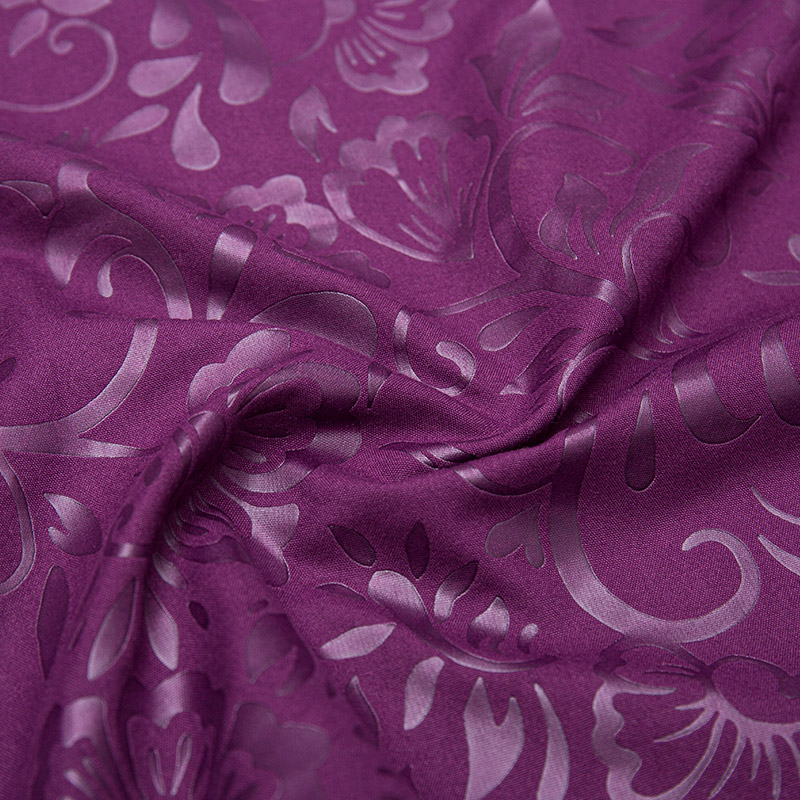 OEM/ODM Textile Dyed Fabric Microfiber 100% Polyester Embossed Stripe Pattern CuChangxing Fanxi Textile Co., Ltd is China wholesale Textile Dyed Fabric Microfiber 100% Polyester Embossed Stripe Pattern Custom design s...View Product →
Inline Inspection Makes Embossed Quality Measurable on Every Roll
AI-based visual inspection is turning embossed pattern quality from a subjective hand-check into a per-roll metric that buyers can compare before the fabric is packed.
Finishing lines now mount four to six camera rigs that measure pattern depth consistency, blur, gloss variation, and edge-to-edge repeat at 40 to 60 meters per minute. Combined with calender logs for temperature, pressure, and line speed, the mill can state a depth tolerance range instead of a sample-based opinion. Published mill trials put defect detection at roughly 60 percent with end-of-line manual checks and at 95 percent with trained vision models.
A roll of embossed polyester is now accepted on three numbers: pattern depth, wash permanence, and color fastness. If a supplier cannot produce all three from its own records, the quality system has not caught up with the technology.
This matters most for large bedding programs. A 50,000-meter hotel order is built from more than 200 rolls, and a depth drift in rolls 40 to 60 appears in the middle of the shipment unless the line catches it. Wide-width suppliers with inline inspection can hold 250cm embossed runs inside a stated depth tolerance, roll after roll.
What to Specify When Sourcing Embossed Fabric in 2026
A reliable embossed fabric order is defined by four parameters: width, GSM, pattern depth, and wash permanence, and the most common sourcing errors come from ignoring the first one.
Width controls seam counts in bedding. A 250cm embossed polyester bed sheet fabric produces a fitted sheet without a center seam, while a 230cm embossed home textile fabric suits pillow panels and smaller formats. GSM decides whether the texture reads crisp, as in 80 to 100gsm, or soft and padded, as in 115 to 140gsm. Pattern depth and wash permanence are the values that turn a good visual sample into a production reality. For buyers choosing between a woven jacquard and an embossed substitute, the cost comparison now favors embossing on runs below 20,000 meters per design; the detailed figures are in the embossed versus jacquard manufacturing guide.
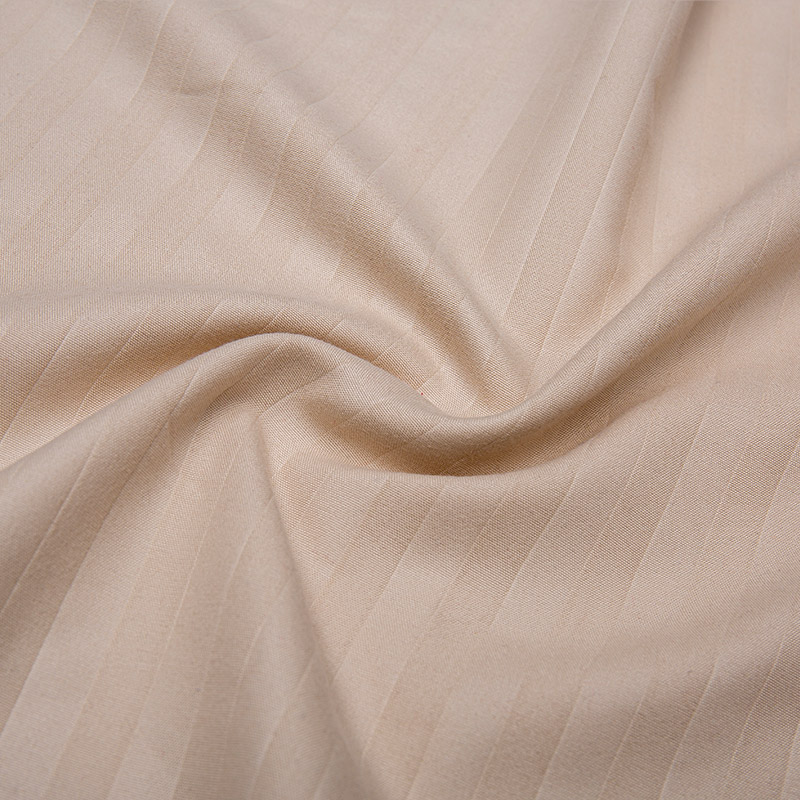 OEM/ODM 230cm 90gsm Dyed with Embossing Design100% Polyester Home Textile FabricChangxing Fanxi Textile Co., Ltd is China wholesale 230cm 90gsm Dyed with Embossing Design100% Polyester Home Textile Fabric suppliers an...View Product →
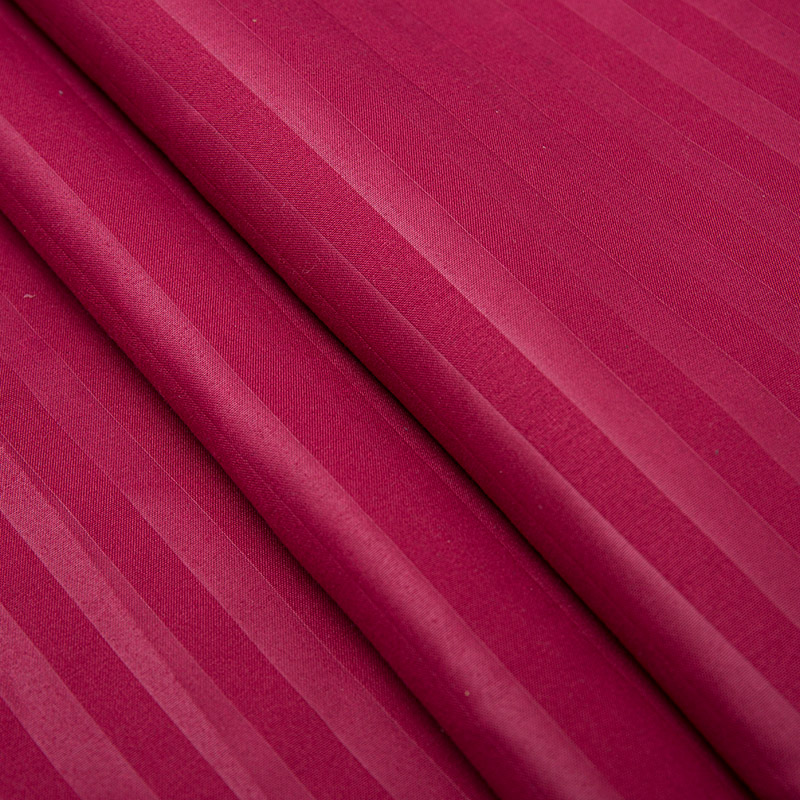 OEM/ODM 250cm 85gsm dyed Microfiber Embossed 100% Polyester bed sheet Fabric forChangxing Fanxi Textile Co., Ltd is China wholesale 250cm 85gsm dyed Microfiber Embossed 100% Polyester bed sheet Fabric for Home Textile...View Product →
| Parameter | Recommended range | Why it matters |
| Finished width | 230-255cm | Fewer seams, faster cut and sew |
| Fabric weight | 80-100gsm bedding, 115-140gsm upholstery | Hand feel versus durability |
| Pattern depth | 0.1-0.6mm | Visual impact versus wash life |
| Wash permanence | 30-40 cycles | Hotel and retail laundering |
| Inspection data | Depth tolerance per roll | Consistent AQL results |
Order samples at production width, not at sampling width. An embossed pattern can look perfect on a 20cm swatch and drift one to two percent across a 250cm roll. That gap is the difference between a sample approval and a claim.
The supplier's production structure matters as much as the calender. Changxing Fanxi Textile Co., Ltd., an integrated manufacturer and exporter based in Huzhou, Zhejiang Province, runs weaving, dyeing, and embossing under one roof, close to Shanghai and Ningbo ports. Controlling temperature and tension history from greige to finished roll is the most reliable route to pattern permanence.
Frequently Asked Questions
Does embossing flatten after washing?
On properly processed 100% polyester, an embossed pattern retains measurable depth through 30 to 40 home wash cycles when drying stays below 60C. Avoid bleach and high-heat drying; both attack the fiber surface faster than they attack the color.
Can embossing be combined with digital printing?
Yes, and it is becoming the default for premium bedding. Print first, then emboss. Printing transfers disperse dye at high temperature, and the subsequent embossing pass defines the texture; the reverse order risks flattening the pattern during printing.
What is the minimum order for a custom embossed pattern?
With digitally engraved sleeves, minimums drop to roughly 3,000 to 5,000 meters per design, depending on width and pattern coverage. Conventional engraved rolls still require 10,000 meters or more to amortize the tooling cost.
Is recycled polyester suitable for embossing?
Yes, when the rPET chip supply is consistent. Pattern depth and color yield on recycled fiber are close to virgin polyester at the same GSM, but buyers should request a wash-permanence test on the actual lot before committing to bulk production.
Bottom line: by 2026, fabric embossing has become measurable, customizable, and energy-conscious. Specify width, GSM, pattern depth, and wash permanence, then ask the mill to prove all four per roll.